Stake ADA with BRIAN. No custody. No lock-up. Just rewards.
BRIAN is an independently operated, single-pool-operator Cardano
stake pool. Delegating helps secure the network and earn staking
rewards — your ADA never leaves your wallet and is never locked up.
Live figures from Koios are unavailable right now. Everything else on this page is unaffected.
About BRIAN Pool
Run by an engineer working in medical technology, BRIAN is a
single-pool operation kept online for family, friends and the
wider Cardano community — with no expectation of anything in
return beyond a stable, reliable node on the network.
🔒
Non-custodial
Your ADA always stays in your own wallet. Delegating never transfers ownership or moves your funds.
🧭
Long-term, low margin
A 1.00% margin and the standard 170 ₳ fixed cost per epoch — priced for sustainability, not short-term yield.
🗳️
Independent governance
Also active as a registered DRep, making on-chain governance decisions independently of the pool's own interests.
5 Jul 2024Pool created
21 Aug 2024First block minted
25 Dec 202410th delegator12 delegators · ₳195.12k staked
Infrastructure and on-chain performance for pool BRIAN.
Infrastructure
Three relay nodes run on Contabo VPS instances in France, the UK and the US. The block producer runs on a dedicated, high-performance server, kept isolated from the public relays for added security.
FR—
UK—
US—
Operations
The pool is monitored daily and node updates are applied promptly. BRIAN also runs a Mithril Signer, contributing cryptographic signatures to Cardano's fast-bootstrap snapshot network — letting new nodes verify and sync from a certified chain snapshot instead of replaying the full history from genesis.
Next goal: operating a validator on Midnight, the Cardano partner chain for data-protecting applications — extending BRIAN's infrastructure beyond the stake pool itself.
Live figures from Koios are unavailable right now — the fixed values below are still correct.
From buying your first ADA to earning staking rewards — the complete path, step by step.
Buy ADA
Purchase ADA on a reputable exchange — many delegators use Kraken.
Move it to your own wallet
Withdraw your ADA to a Cardano light wallet you control, such as Eternl (or any other CIP-30-compatible wallet). Staking only works from your own wallet — ADA sitting on an exchange can't be delegated to a pool.
Stake to BRIAN
Delegating only assigns your stake's weight to a pool — it never transfers or locks your ADA, and you can undo or redirect it anytime. It costs a small one-time network fee (~0.17 ₳), and the very first time you ever delegate, a refundable 2 ₳ stake-key deposit that you get back when you deregister.
Rewards don't start immediately — they follow a fixed, on-chain schedule measured in 5-day epochs, not a fixed number of days.
🤝
Epoch N — you delegate
Your delegation transaction confirms on-chain. Your ADA never leaves your wallet.
📸
Epoch N+1 — stake snapshot
Cardano snapshots stake distribution at the epoch boundary — the basis for "active stake."
⚙️
Epoch N+2 — pool is active for you
BRIAN's block production is now weighted by your stake share from this epoch on.
💰
Epoch N+3 — first rewards paid
Rewards for epoch N+2 are calculated and paid automatically — about 15–20 days after you first delegated.
A rough estimate based on BRIAN's historical Lifetime ROS — not a guarantee. Actual rewards depend on future block production and can be lower, higher, or absent in a given epoch.
₳
—
Est. per epoch
—
Est. per year
Waiting for live pool data (Lifetime ROS) to load…
Cardano, Technically
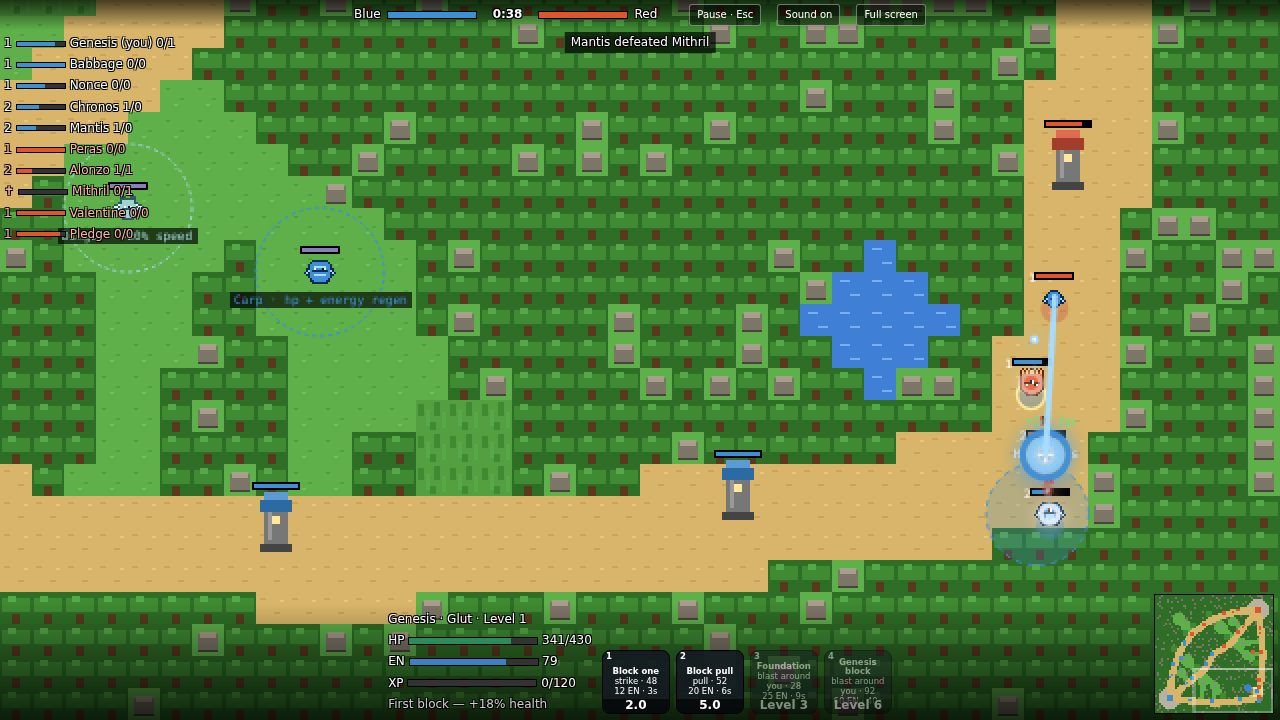
A short primer on the protocol design that makes staking on Cardano work the way it does — each idea carried by one of the 45 monsters from the Ticker Arena.
Ouroboros · Nebel
Ouroboros Praos
Peer-reviewed, provably secure proof-of-stake consensus. Slot leaders are chosen pseudo-randomly, weighted by stake — no mining, no energy race, with security proven mathematically rather than assumed.
Datum · Quell
Extended UTXO (eUTxO)
Builds on the proven UTXO ledger model and adds scripting on top. Every transaction's validity can be checked locally and deterministically before it's ever submitted — no global state required.
Plutus · Byte
Plutus & Haskell
Smart contracts run in Plutus, built on Haskell. A functional, strongly-typed foundation was chosen deliberately, so core protocol components can be formally verified rather than just tested.
Epoch · Wind
Epochs & slots
Time is split into 5-day epochs made up of 1-second slots. Stake distribution is snapshotted once per epoch — the reason staking rewards arrive with a multi-epoch delay, not instantly.
Chang · Glut
Voltaire governance
Under CIP-1694, on-chain governance power over protocol parameters and treasury spending is split between ADA holders, DReps, SPOs and a Constitutional Committee — no single party decides alone.
Basho · Flora
Energy efficiency
Proof-of-stake replaces energy-intensive mining with cryptographic, stake-weighted selection — using orders of magnitude less energy per transaction than proof-of-work chains.
Governance & DRep
Beyond running the pool, BRIAN also participates in Cardano's on-chain governance (Voltaire / CIP-1694) as a registered Delegated Representative (DRep).
Delegators vote. BRIAN reports back.
Every governance action opens a member vote here, automatically. It is advisory: BRIAN casts the vote on chain, then says whether it followed the members — and where it did not, why.
See what is open — results are public, the discussion is for delegators.
Governance decisions are researched independently of the pool's own interests. Register as your own DRep, or delegate to a representative whose reasoning you trust — participation matters more than any single outcome.
Type a question about Cardano staking, delegation or the BRIAN pool and get a short AI-generated answer.
Your question is sent to Google Gemini to generate the answer, without any account or wallet information attached. See the Privacy Policy.
AI-generated answer — may be inaccurate, not financial advice, always verify independently.
Is my ADA locked up when I delegate?
No. Delegated ADA remains liquid and spendable at any time. Delegation only assigns your stake's weight to a pool — it does not lock or transfer your funds.
Is there a minimum amount to delegate?
No minimum amount is required. You need enough ADA to cover the small one-time delegation transaction fee (about 0.17 ₳), the wallet's minimum UTXO requirement, and — only the first time you ever delegate — a refundable 2 ₳ stake-key deposit, returned when you deregister the key.
Can I switch pools later?
Yes, you can re-delegate to a different pool at any time by submitting a new delegation transaction from your wallet.
How often are rewards paid out?
Rewards are calculated and distributed automatically every epoch (5 days) once your delegation becomes active, typically 15–20 days after you first delegate.
Why choose a small pool like BRIAN over a large one?
Cardano's protocol rewards decentralization: delegating to smaller, non-saturated pools helps keep the network healthy and can offer comparable long-term rewards to large pools.